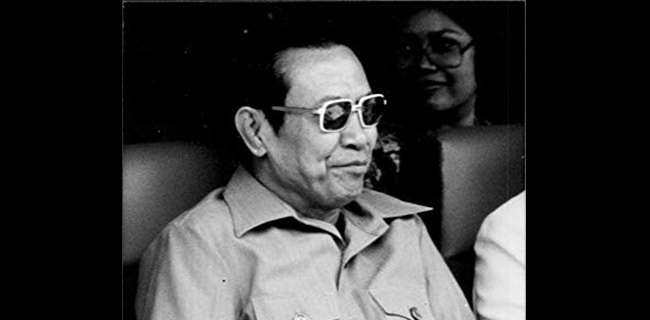
(Photo credit: Republik Merdeka News Agency/RMOL)
CONTREV: Conservatism and the Making of Modern Indonesia
The objective of this project is to explain the enduring influence of conservatism in democratic processes in the Global South, identify major features of this ideology, and analyse its parallels and divergences with Western conservatism. Conservatism is defined as a reactionary, pragmatic, and cross-class idea-cum-movement in defence of hierarchies, stability, and tradition. Studies on conservatism, however, tend to be Western-oriented, paying less attention to specific forms of non-Western conservatism. At the same time, conservatism in the Global South is typically examined in terms of institutional and material dimensions of democratic backsliding, neglecting the negative impact of conservative ideas on democratic quality. The transformation of Indonesian conservatism in recent decades (1966-2019) provides a vantage point from which to critically analyse conservative thoughts and praxis globally. This project, through archival studies and interviews, will pursue this inquiry by studying the lives and thoughts of three leading groups of middle-class conservative thinkers in Indonesia: anti-communist intellectuals, pro-market economists, and Islamist anti-feminist women activists. The project hypothesises that the enduring influence and consolidation of multi- strand conservatism in Indonesia is an expression of turbocharged mesocracy or middle-class rule, where the middle-class, out of fear of lower-class redistributive demands and socio-cultural dislocations under capitalism, support an elitist form of democracy, market economy with limited social welfare, and patriarchal family values.
The early phase of this project received financial and institutional support from International Institute for Asian Studies (IIAS) at Leiden University. This project, submitted under the 2023 Marie Sklodowska-Curie Actions (MSCA) Postdoctoral Fellowships Call, received a Seal of Excellence certificate in April 2024 (Score: 92.8).
Major phase of this project, divided into two periods, will be completed at Central European University Democracy Institute (CEU DI) from October 2024-March 2025 and Department of Foreign Languages, Literatures and Modern Cultures (DFLM) at University of Turin from June 2025-May 2027. At DFLM, this project receives financial support from the Trapezio Fellowship from Fondazione Compagnia di San Paolo.
 Iqra Anugrah